Featured
Table of Contents
In 2026, the most effective startups utilize a barbell strategy for client acquisition. On one end, they have high-volume, low-intent channels (like social networks) that drive awareness at a low expense. On the other end, they have high-intent, high-cost channels (like specialized search or outbound sales) that drive high-value conversions.
The burn multiple is an important KPI that determines just how much you are spending to produce each brand-new dollar of ARR. A burn several of 1.0 ways you invest $1 to get $1 of brand-new income. In 2026, a burn several above 2.0 is an instant red flag for financiers.
Critical Factors of Profitable B2B ScalingScalable startups frequently use "Value-Based Pricing" rather than "Cost-Plus" designs. If your AI-native platform conserves an enterprise $1M in labor expenses yearly, a $100k annual membership is a simple sell, regardless of your internal overhead.
The most scalable organization concepts in the AI area are those that move beyond "LLM-wrappers" and build exclusive "Reasoning Moats." This indicates using AI not just to generate text, but to optimize intricate workflows, predict market shifts, and provide a user experience that would be impossible with conventional software. The rise of agentic AIautonomous systems that can perform complex, multi-step taskshas opened a brand-new frontier for scalability.
From automated procurement to AI-driven project coordination, these agents enable an enterprise to scale its operations without a corresponding boost in functional complexity. Scalability in AI-native startups is often a result of the data flywheel result. As more users interact with the platform, the system gathers more proprietary information, which is then used to refine the models, resulting in a much better product, which in turn draws in more users.
Enhancing Customer Acquisition Using AI Technology
When assessing AI startup development guides, the data-flywheel is the most mentioned element for long-term viability. Reasoning Advantage: Does your system become more precise or effective as more information is processed? Workflow Combination: Is the AI embedded in such a way that is necessary to the user's everyday jobs? Capital Effectiveness: Is your burn several under 1.5 while keeping a high YoY development rate? One of the most typical failure points for start-ups is the "Performance Marketing Trap." This happens when a service depends entirely on paid ads to acquire new users.
Scalable business concepts avoid this trap by developing systemic circulation moats. Product-led development is a strategy where the product itself works as the main driver of customer acquisition, expansion, and retention. By providing a "Freemium" model or a low-friction entry point, you permit users to realize worth before they ever talk to a sales rep.
For founders looking for a GTM structure for 2026, PLG remains a top-tier suggestion. In a world of details overload, trust is the supreme currency. Building a community around your item or industry niche develops a circulation moat that is nearly difficult to duplicate with cash alone. When your users become an active part of your product's advancement and promotion, your LTV boosts while your CAC drops, creating a powerful financial benefit.
Advanced Sales Support Tactics for Global Leaders
A startup constructing a specialized app for e-commerce can scale quickly by partnering with a platform like Shopify. By incorporating into an existing community, you acquire immediate access to an enormous audience of potential consumers, considerably decreasing your time-to-market. Technical scalability is often misunderstood as a purely engineering issue.
A scalable technical stack permits you to deliver features faster, preserve high uptime, and lower the cost of serving each user as you grow. In 2026, the baseline for technical scalability is a cloud-native, serverless architecture. This method allows a start-up to pay just for the resources they utilize, guaranteeing that facilities expenses scale perfectly with user demand.
A scalable platform needs to be constructed with "Micro-services" or a modular architecture. While this adds some preliminary intricacy, it prevents the "Monolith Collapse" that often occurs when a start-up attempts to pivot or scale a rigid, legacy codebase.
This surpasses just writing code; it includes automating the testing, release, monitoring, and even the "Self-Healing" of the technical environment. When your facilities can automatically identify and fix a failure point before a user ever notices, you have actually reached a level of technical maturity that allows for really international scale.

Does Advanced AI Redefine B2B Growth Strategy?
Unlike conventional software, AI efficiency can "wander" gradually as user habits changes. A scalable technical foundation consists of automated "Model Tracking" and "Continuous Fine-Tuning" pipelines that guarantee your AI stays accurate and effective no matter the volume of requests. For ventures focusing on IoT, self-governing lorries, or real-time media, technical scalability needs "Edge Infrastructure." By processing information more detailed to the user at the "Edge" of the network, you lower latency and lower the burden on your central cloud servers.
You can not manage what you can not measure. Every scalable service idea should be backed by a clear set of performance indicators that track both the present health and the future potential of the venture. At Presta, we assist founders develop a "Success Dashboard" that focuses on the metrics that really matter for scaling.
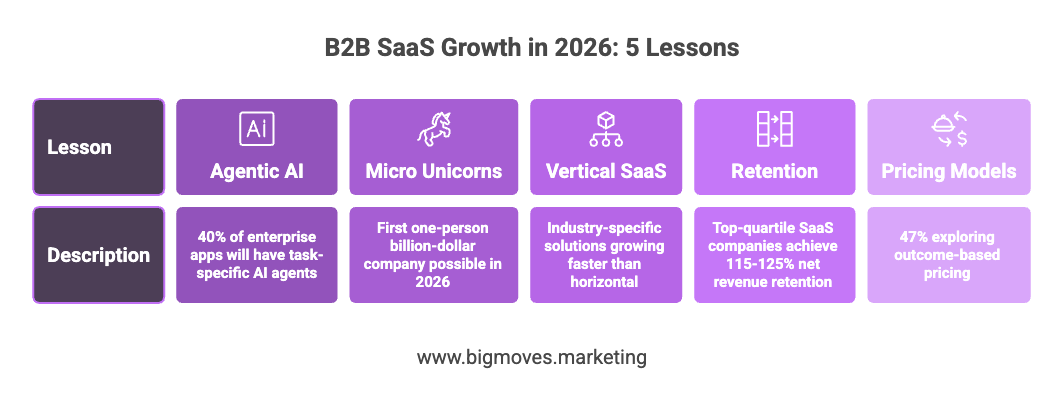
By day 60, you should be seeing the very first indications of Retention Trends and Repayment Period Reasoning. By day 90, a scalable start-up needs to have adequate information to prove its Core System Economics and justify additional financial investment in growth. Income Growth: Target of 100% to 200% YoY for early-stage ventures.
Understanding Role of AI in Marketing Scalability
NRR (Net Income Retention): Target of 115%+ for B2B SaaS designs. Guideline of 50+: Integrated growth and margin percentage must exceed 50%. AI Operational Leverage: At least 15% of margin enhancement ought to be directly attributable to AI automation.
The main differentiator is the "Operating Leverage" of the organization model. In a scalable business, the marginal cost of serving each new client decreases as the company grows, causing broadening margins and greater profitability. No, lots of startups are really "Lifestyle Services" or service-oriented designs that do not have the structural moats necessary for true scalability.
Scalability requires a specific positioning of innovation, economics, and circulation that enables the business to grow without being limited by human labor or physical resources. You can confirm scalability by performing a "System Economics Triage" on your idea. Determine your predicted CAC (Customer Acquisition Expense) and LTV (Lifetime Worth). If your LTV is at least 3x your CAC, and your payback period is under 12 months, you have a foundation for scalability.

Latest Posts
Comparing Traditional SEO and Modern AI Systems
Why AI-Powered Optimization Software Boost Growth
How Voice Search Technology Change Search Strategy